
September 29, 2026
Document Q&A — building a retrieval system that knows when not to answer
Built Django document Q&A with configured 768-dimensional embeddings, top-5 retrieval, batch imports, category filtering, retry handling, and a no-context fallback.
Personal prototype
- Role
- Software engineer
- Published
- September 2026
- Focus
- Personal prototype
- Engineer
- Saaim Abdullah
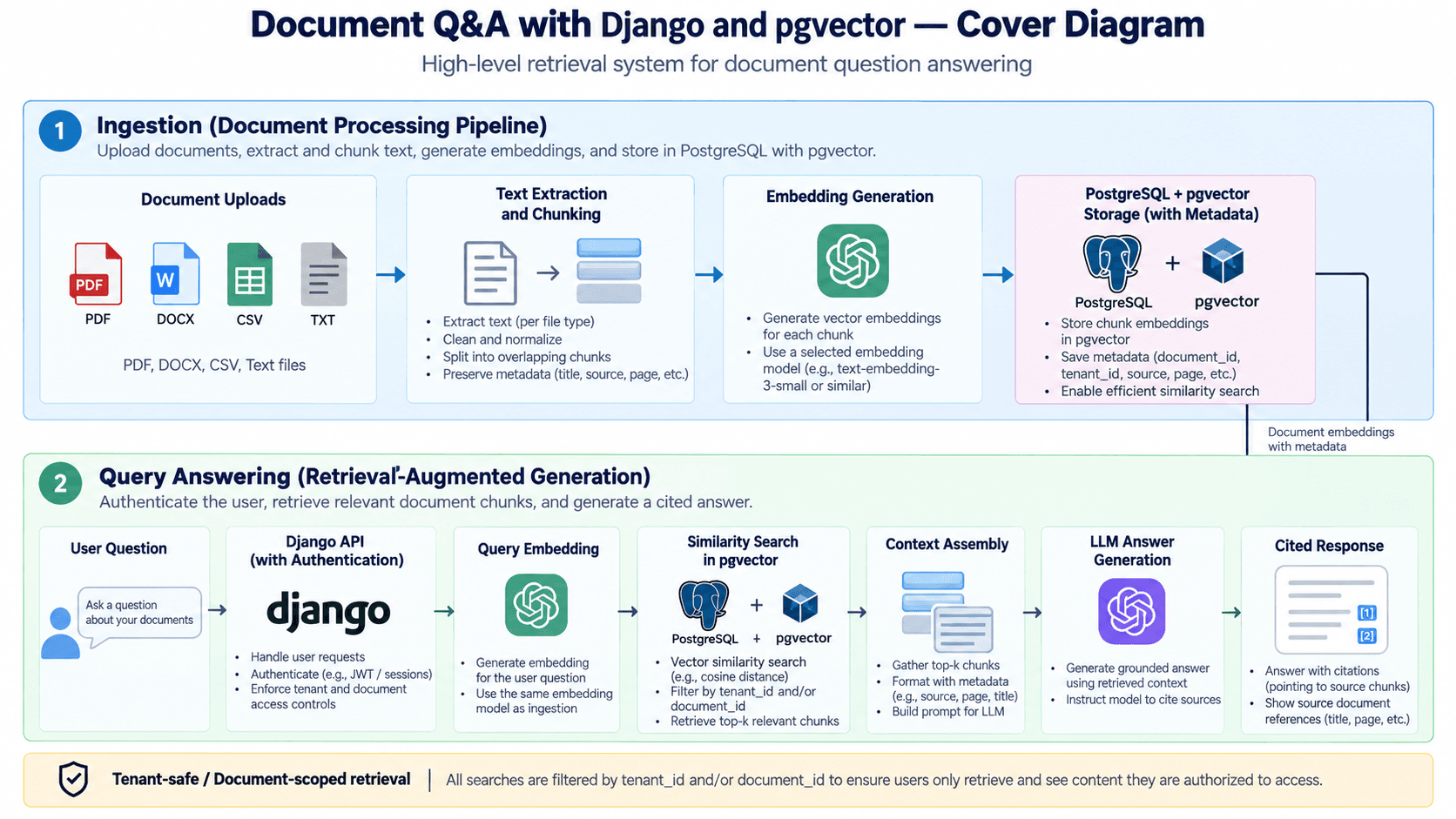
The product problem: answer from the dataset, not from a guess
System facts and configured numbers
| Metric or configuration | Documented value | Interpretation |
|---|---|---|
| Public API operations | 3 — query, ingest, health | Separate serving, data administration, and readiness paths |
| Embedding width | 768 dimensions | Vector schema and embedding model must agree |
| Candidate limit | Top 5 | Bound the context admitted to generation by default |
| Cosine distance threshold | 0.7 | Filter candidates with distance above the configured cutoff |
| Ingestion batch size | 20 records | Bound each embedding request during CSV import |
| API quota retry setting | 3 attempts | Recover from transient provider rate limits with backoff |
| Required input columns | 4 — name, category, question, answer | Explicit and testable ingestion contract |
| Generation service | Gemini | External inference dependency, distinct from PostgreSQL |
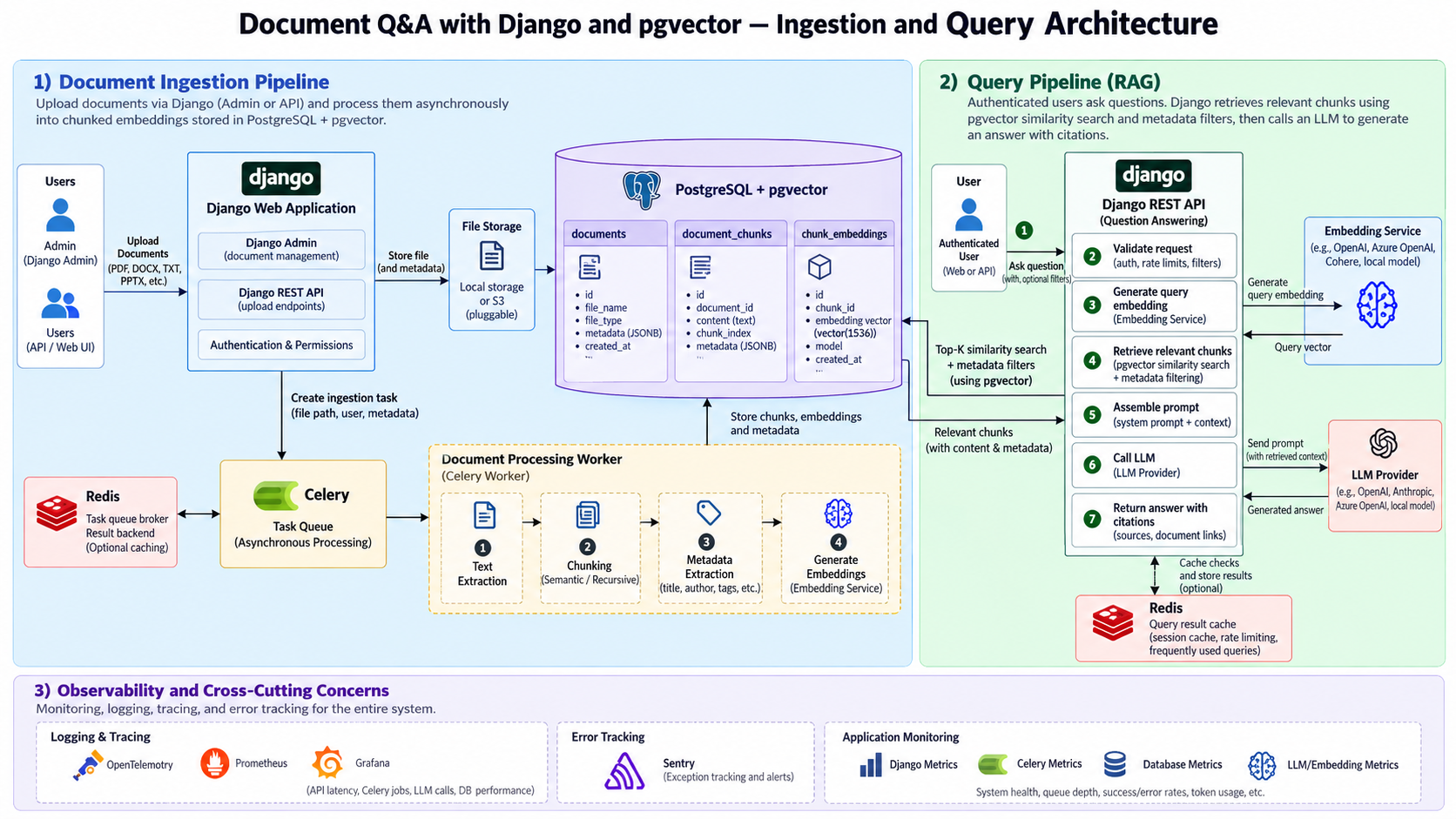
End-to-end request and data flow
| Step | Input | Work performed | What can fail |
|---|---|---|---|
| 1. Import | CSV file | Validate required columns and normalize Q&A rows | Schema errors, malformed content |
| 2. Embed | Text batches | Request Gemini embeddings | Quotas, model changes, network errors |
| 3. Persist | Content + metadata + vectors | Store in PostgreSQL with pgvector | Partial imports, incompatible dimensions |
| 4. Query | User question + optional category | Embed query with same model family | Provider latency, unavailable API |
| 5. Retrieve | Query vector | Rank stored vectors by cosine distance; filter by category | Poor matches, unbounded search cost |
| 6. Gate | Retrieved candidates | Apply top-K and distance cutoff | Relevant evidence absent |
| 7. Generate | Selected Q&A records | Build constrained prompt and call Gemini | Unsupported assertions, timeout |
| 8. Respond | Answer + context | Return answer and source context, or fallback | Client contract, sensitive source exposure |
Import is part of the product, not a one-off script
Retrieval has a refusal boundary
0.7 cutoff is a retrieval parameter that should be calibrated against question sets and expected false positives. I would separately measure relevance of retrieved records and faithfulness of the generated answer; good search results do not automatically guarantee good generation.
The API is deliberately smaller than the architecture
| Endpoint | Role | Contract |
|---|---|---|
POST /query/ | Query a stored knowledge base | Question, optional category; answer and retrieved context |
POST /ingest/ | Import Q&A CSV | Validates columns and reports ingested/skipped records |
GET /health/ | Health inspection | Includes database connectivity and stored chunk count |
The engineering trade-offs
| Choice | Why I made it | Cost or limitation |
|---|---|---|
| PostgreSQL + pgvector | One database stores content, source metadata, and vectors | Index strategy matters as corpus grows |
| Hosted embeddings | Simplifies local model operations and deployment | Adds provider latency, quotas, and data boundary |
| Top-K + threshold | Keeps generation grounded in bounded evidence | Needs dataset-specific relevance calibration |
| Source/category metadata | Makes results inspectable and filterable | Import mapping must be consistent |
| Provider retry logic | Handles transient 429 errors | Retries need budgets and can increase latency |
| Refusal without retrieved context | Reduces unsupported, costly generation calls | May decline answerable questions if retrieval misses |
A concrete operational failure scenario
What is implemented, and what is not
Result and measurable next milestone
Source and technical walkthrough
More to explore
Sep 29, 2026
Sep 29, 2026
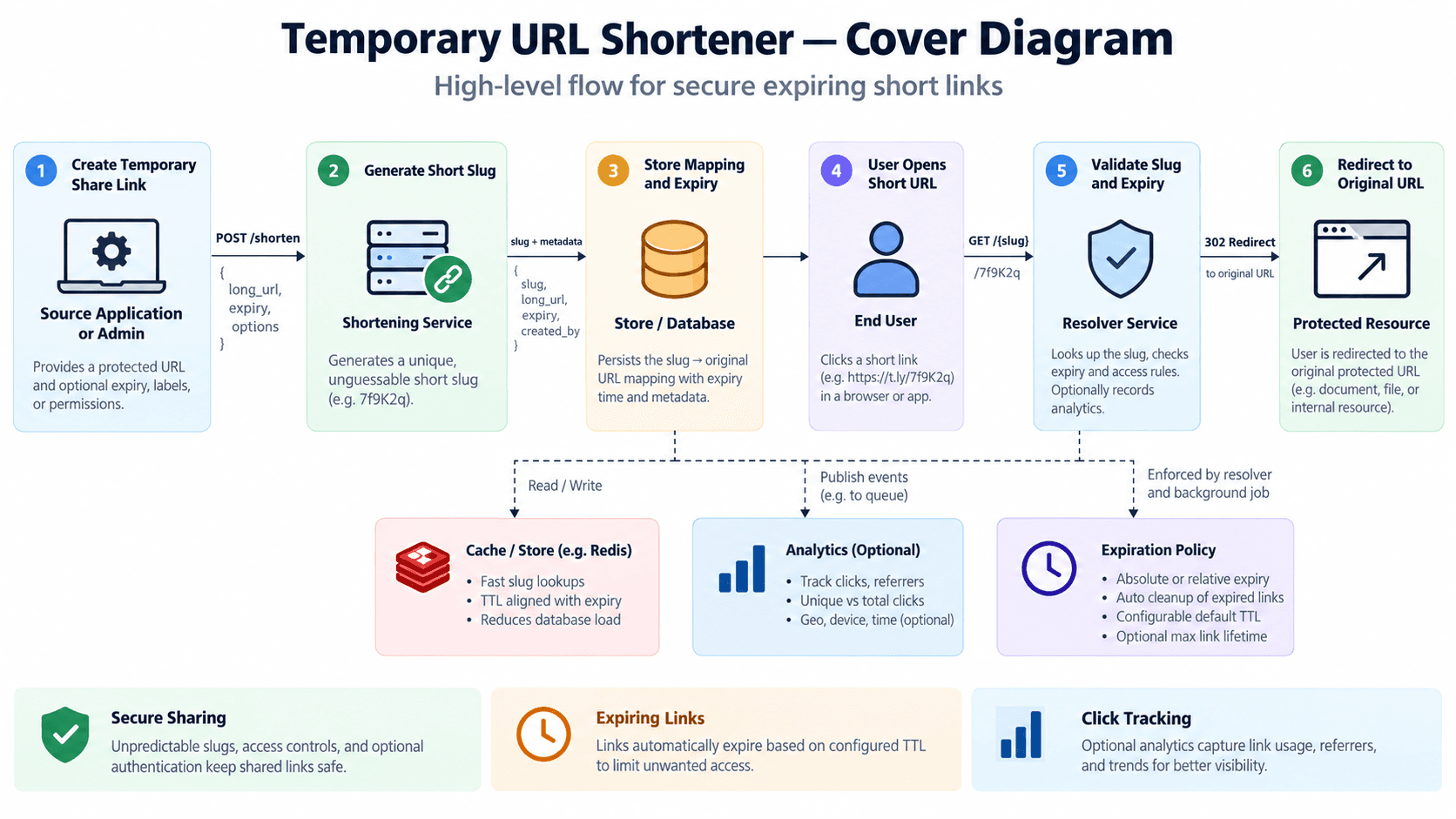
Expiring URL service — designing a small API around explicit failure modes
Implemented 8-character aliases, create/redirect/lookup operations, scheduled expiry, and a health endpoint in Express.
View projectPersonal prototype
Jul 15, 2026
Jul 15, 2026
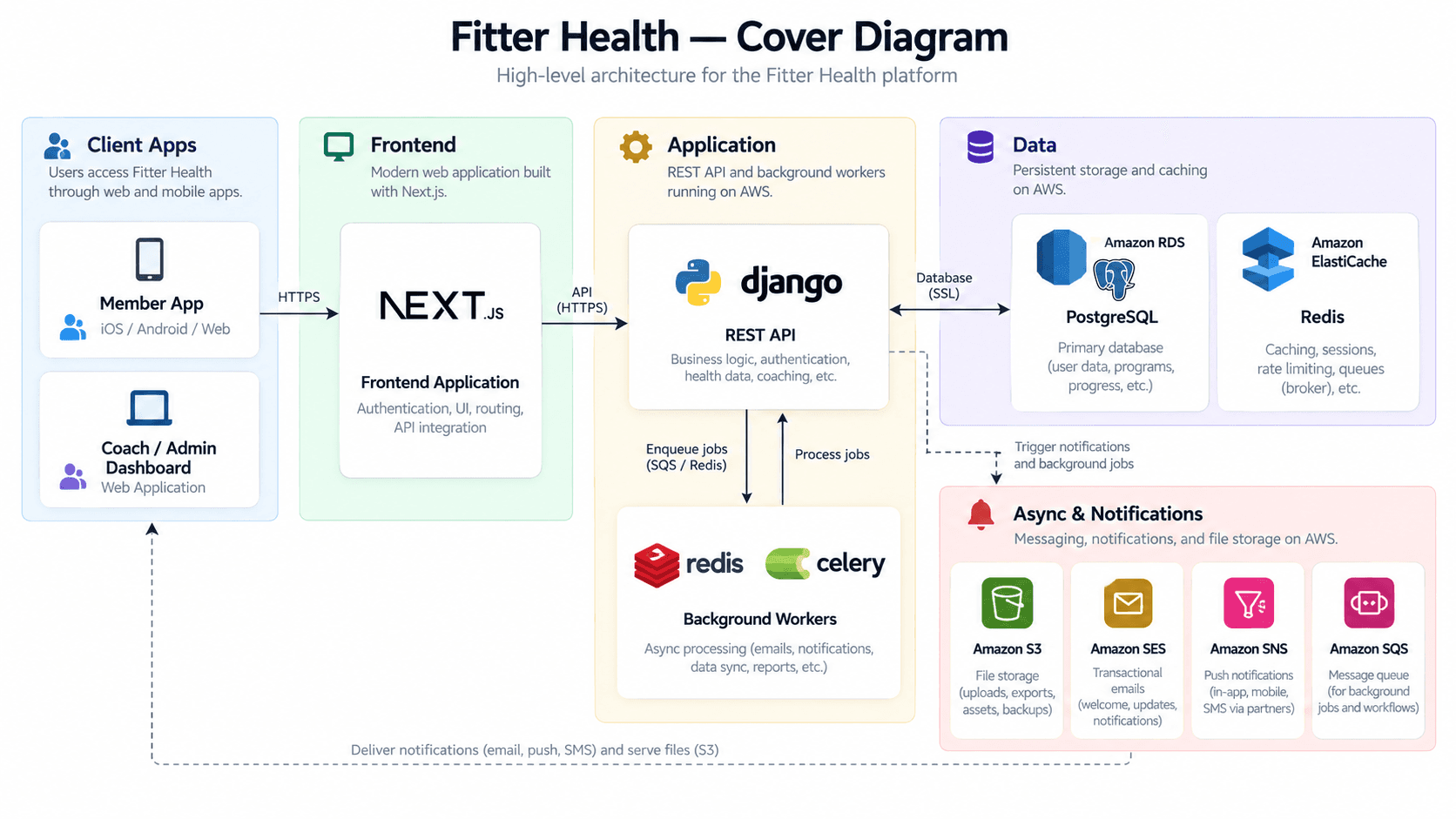
Fitter Health
Sole engineer across a 106-table healthcare platform, 135 passing tests, AWS delivery, and durable notification recovery.
View projectClient deliveryFull stack
SaaimOpen to full-time roles, contract work, and conversations about things worth building.